
Last updated November 15, 2026
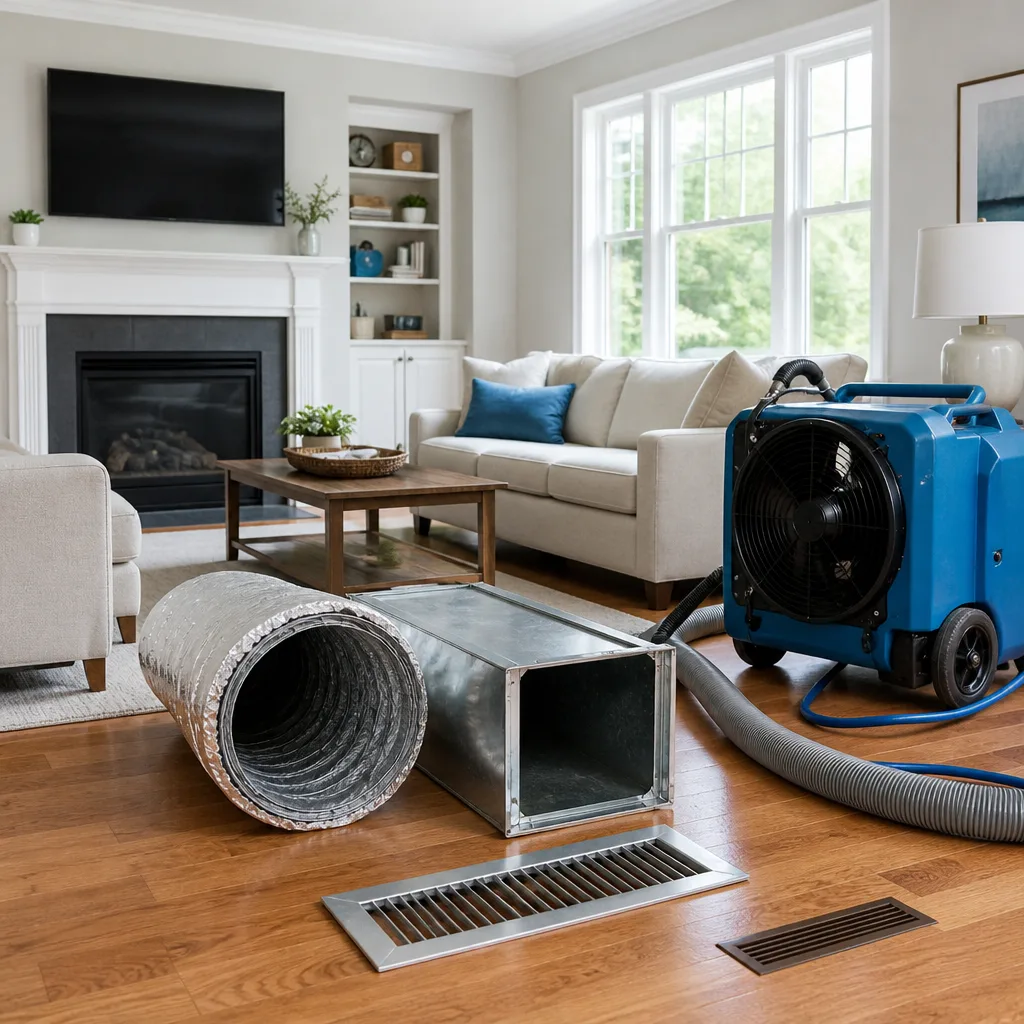 Whole-home duct cleaning
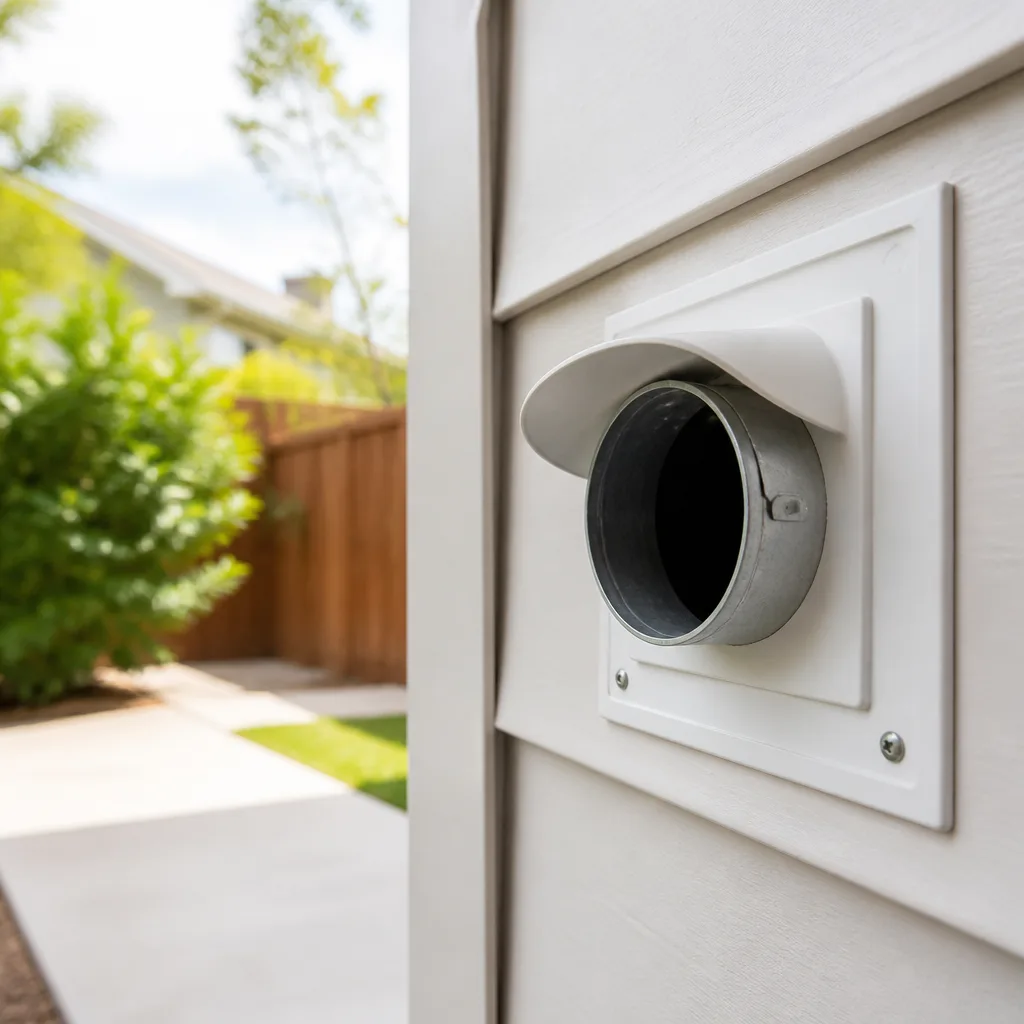 Dryer vent cleaning
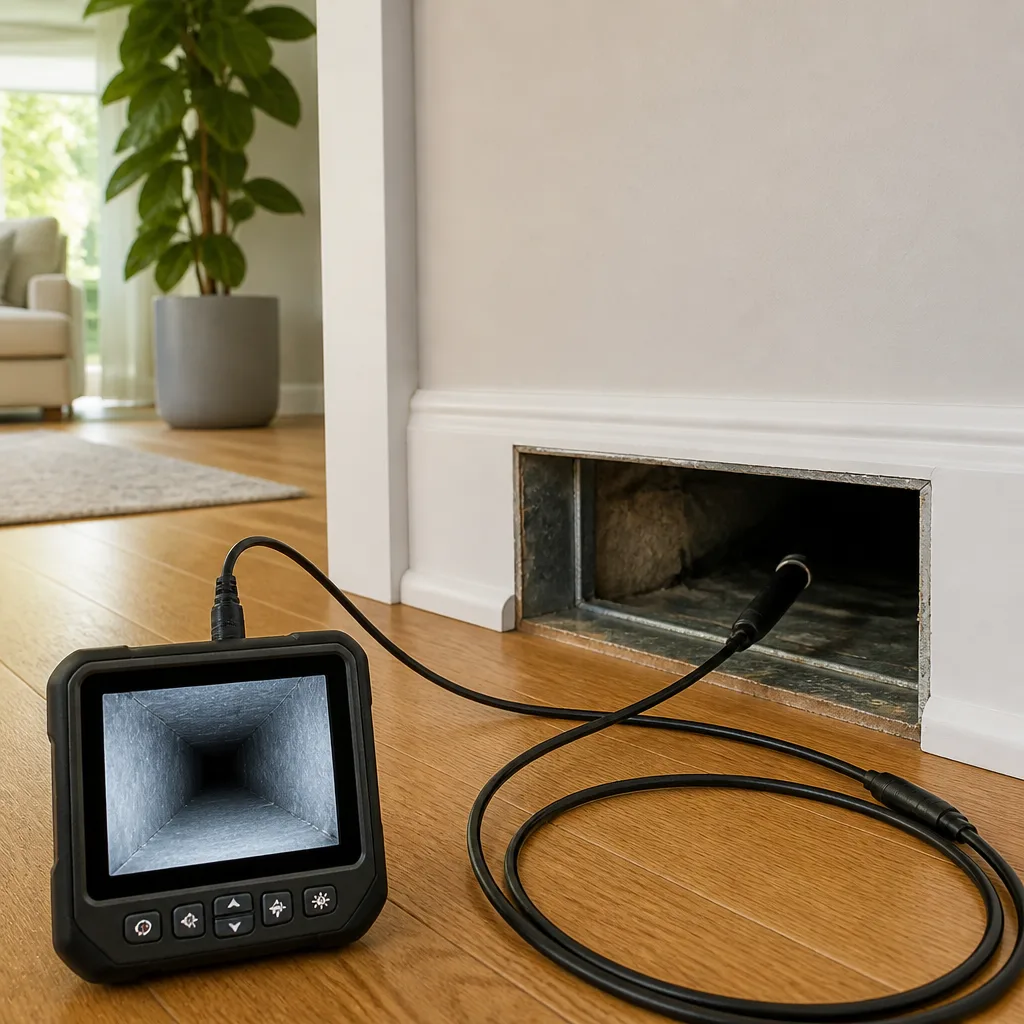 Camera inspection
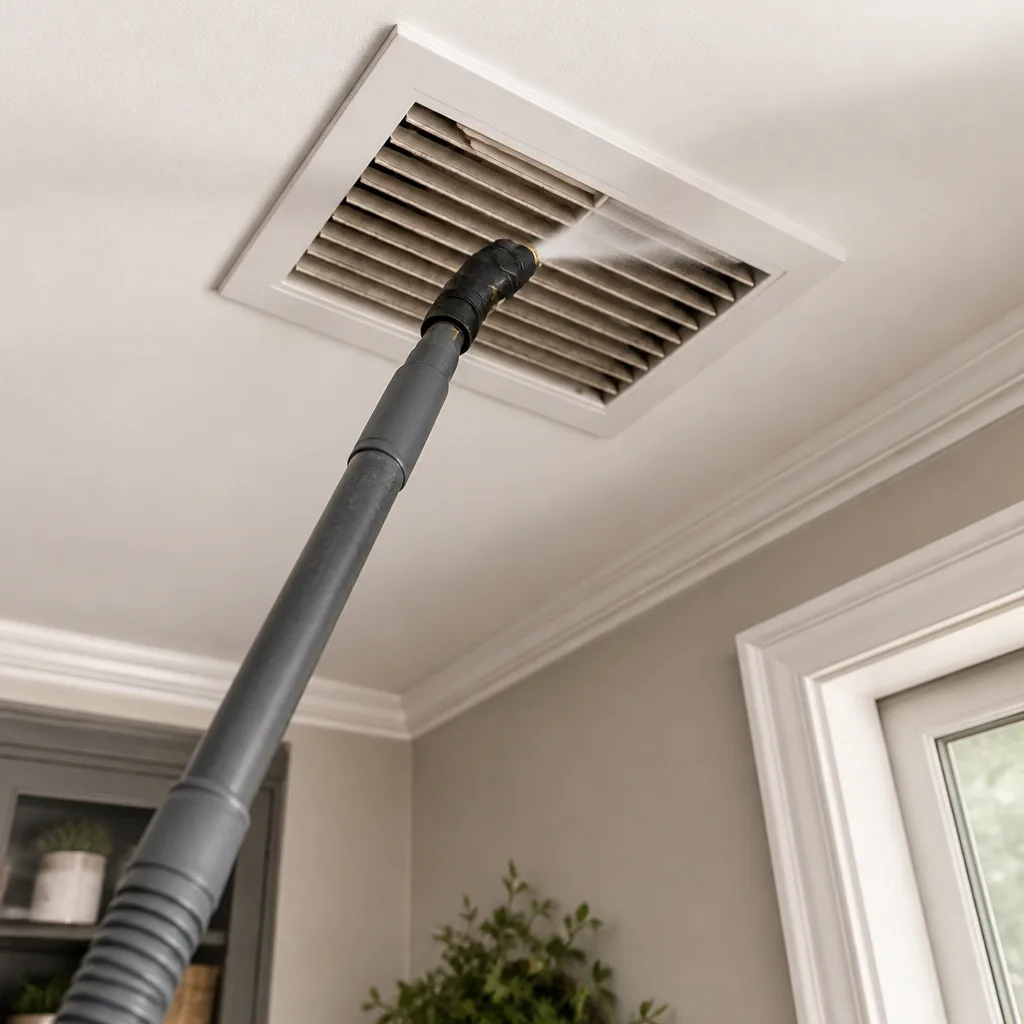 Sanitizing & deodorizing
Whole-system duct and dryer vent check with before-and-after photos - you see exactly what came out of your vents
That "$99 whole-house special" is a bait ad - the real number appears once they are in your hallway, or the "clean" is a shop-vac at the register. We photograph the inside of your ducts before and after instead.
Air Duct Cleaning Maintenance Schedule: What to Do and When
The “clean your ducts every 3 to 5 years” rule gets repeated everywhere, but it didn’t come from airflow data. It came from an industry association looking for a simple number to put on a brochure. A household in Renton with two dogs, a furnace pulling air through aging duct wrap, and a MERV-8 filter on its last legs needs a very different schedule than two people in a newer build running a tight Aprilaire setup with a MERV-13 filter they actually change. This guide replaces the one-size rule with a decision framework: the household factors that actually drive debris buildup, the seasonal windows worth watching in Renton, the filter math that stretches your interval, and the events that reset the clock entirely.
Quick Answer
There’s no single correct interval for air duct cleaning. Most homes land somewhere between every 2 and every 7 years, and the interval is set by pets, filter grade and filter discipline, renovation activity, allergies in the household, and system age. In Renton, the humid shoulder seasons in fall and spring are the best window to inspect for moisture-related buildup before it compounds. A full professional cleaning resets the clock, and what you log afterward sets the next interval with real data instead of a guess.
Styles & brands we work with
- Whole-home duct cleaning
- Dryer vent cleaning
- Camera inspection
- Sanitizing & deodorizing
Table of Contents
- Why the 3-to-5-Year Rule Falls Short
- The Household Variables That Set Your Real Interval
- Renton’s Shoulder Seasons and the Inspection Window
- Filter Maintenance as a Schedule Multiplier
- What to Log After Every Professional Cleaning
- The Events That Reset Your Schedule Immediately
- Dryer Vent Cleaning: A Separate Schedule
- Common Mistakes to Avoid
Why the 3-to-5-Year Rule Falls Short
A fixed interval assumes every home loads its ductwork at the same rate. They don’t. The 3-to-5-year figure became common because it’s easy to remember and easy to print, not because anyone measured debris accumulation across thousands of households and found a clean break at year three. What actually fills a duct system is a set of load factors you can see and count in your own home.
Walk through a typical Renton house and you can usually spot the load factors in under ten minutes. Pet hair and dander collect on duct walls the same way they collect on baseboards. Return-air grilles darken faster in homes with shedding animals. New construction and renovation push drywall dust and sawdust into the system through open returns, and that material settles in runs the vacuum never reaches. Older duct wrap degrades, and fiberglass particles join the airstream. Each of those adds load. None of them care what year the last cleaning happened.
A better way to think about it: your duct system has a debris budget, and every one of these factors spends from it at a different rate. A quiet two-person household with a good filter and no pets might stretch to seven years. A home with three pets, a recent kitchen remodel, and a filter that gets changed when someone remembers might need attention in two. Both are normal. The number that matters is the one your household’s load factors produce, and the way to find it is to inspect and log rather than assume.
The practical takeaway is to stop asking “am I due?” and start asking “what’s my load?” Once you know your load factors, an inspection tells you far more than a calendar ever will. For a baseline on what a full professional cleaning involves, see our air duct cleaning page.
The Household Variables That Set Your Real Interval
Five variables do most of the work in setting your interval. Score each one for your home and you’ll have a working schedule instead of a guess.
1. Pets
One shedding dog or cat roughly halves the interval compared with a pet-free home of the same size. Two or more shedding animals, or any long-haired breed, pushes it shorter still. Pet hair binds to dust on duct walls and creates matted buildup that a light cleaning won’t lift.
2. Filter MERV rating and change discipline
A higher-MERV filter catches more before it reaches the ducts, which extends the interval. A filter left in place well past its change point does the opposite: it loads up, airflow drops, and the system starts pulling dust past the frame. Filter grade and change habits matter as much as the cleaning itself, and we cover the math in its own section below.
3. Recent renovation
Any drywall work, flooring replacement, or kitchen or bath remodel pushes fine particulate into the return system. Assume a renovation adds meaningful load even if the crew taped off the work area, because return grilles pull from the whole house.
4. Allergies and respiratory sensitivity in the household
If someone in the home deals with seasonal allergies or asthma, the threshold for “clean enough” moves earlier. You’re not waiting for visible buildup; you’re keeping the system from becoming a reservoir in the first place.
5. System age and duct condition
Older duct systems, especially ones with degrading internal wrap or unsealed joints, accumulate debris faster and distribute it more freely. If your ducts are older and never sealed, budget for shorter intervals and get the joints checked.
Score your home against those five and you’ll land in a range. Use it as a starting point, then let inspection and logged data refine it. Homes in Renton’s older neighborhoods, where duct systems have had more decades to accumulate, tend to start on the shorter end of whatever range the variables suggest.
Renton’s Shoulder Seasons and the Inspection Window
Renton sits in a climate with distinct wet shoulder seasons, and that matters for ducts more than most homeowners realize. Fall and spring bring stretches of cool, humid weather when the heating system cycles on and off without running long enough to dry things out. That’s the window where moisture-related problems get their start.
Here’s the mechanism. Cool, damp air enters a duct system that isn’t running much, and condensation can form on cooler metal surfaces. Dust that’s already settled on those surfaces becomes a food source for microbial growth when moisture lingers. You won’t smell it right away. What you might notice first is a musty edge to the air when the heat kicks on, or a return grille that looks darker than it did in summer. By the time it’s obvious, the buildup has had weeks to compound.
The useful move is to schedule an inspection in early fall, before the heating season runs steady, and again in spring after the wet stretch ends. Those two checkpoints catch moisture-related issues while they’re still small. If you notice any of the following during a shoulder season, bring the inspection forward:
- A musty or stale smell when the furnace first comes on
- Visible darkening or dampness around return grilles
- Condensation or water staining on duct surfaces you can see in the basement or crawlspace
- Any recent roof or plumbing leak that could have reached duct runs
Renton’s wet season also means crawlspaces and garages stay damp longer, and duct runs passing through those spaces are the first to show it. A short inspection in the shoulder months costs far less than dealing with growth that’s spread through the system. The full range of what we do in Renton covers inspection, cleaning, and repair in one scope, which helps when an inspection turns up a problem worth fixing the same visit.
Filter Maintenance as a Schedule Multiplier
Your filter is the cheapest lever you have on your duct cleaning interval, and most homeowners underuse it. Upgrading from a MERV-8 to a MERV-11 filter meaningfully reduces how much particulate reaches the duct walls, which extends the time between full cleanings. It’s not a substitute for cleaning, but it changes the math.
The tradeoff is real: a higher-MERV filter is more restrictive, so the system has to be able to handle it. Very high ratings can strain some blowers, especially in older systems with undersized returns. A MERV-11 is a sensible step for most homes that want better filtration without choking airflow. If you’re running a premium setup already, brands like Honeywell and Aprilaire make filter cabinets and media filters designed to handle higher ratings properly, and the right filter choice depends on what your system was built for.
Change discipline matters even more than the rating. A MERV-13 filter left in for a year is worse than a MERV-8 changed on schedule, because a loaded filter stops catching and starts bypassing. Here’s a working rhythm:
- Check the filter monthly during heavy-use months and at least quarterly otherwise.
- Replace when the filter is visibly gray across the face or light won’t pass through it.
- Shorten the change interval during renovation, high-pollen stretches, or if you have shedding pets.
- Write the change date on the filter frame so you’re not guessing next time.
When you log filter changes alongside your cleaning dates, you can see the relationship directly. Homes that step up filter grade and keep to a change schedule typically stretch their cleaning interval by roughly a third to a half compared with homes running a loaded low-MERV filter. That’s a real saving over a decade of ownership. And it’s exactly the kind of household data a Duct Cleaning Renton technician uses to set the next visit with you rather than for you.
What to Log After Every Professional Cleaning
The single biggest gap in most homeowners’ maintenance records is that nothing gets logged. The next technician starts from zero, and you start from a guess. Logging a few data points after each cleaning turns every future service call into a comparison against actual baseline data.
What to record:
- Equipment used. Note the extraction and filtration rig. We use professional-grade Rotobrush and Nikro systems with Abatement Technologies air filtration on site, so you can record exactly what ran in your home and compare if you ever change providers.
- Pre- and post-cleaning static pressure readings. This is the number that tells you how hard your system is working to move air. A rising static pressure between cleanings is an early sign of buildup or a duct problem worth investigating.
- Before-and-after photos of your own ducts. Interior shots of the same run, taken from the same angle, are worth more than any sales pitch.
- Filter grade and last change date. This is the variable most likely to explain a change in buildup rate.
- Any repairs or sealant work done. Note where and what, so the next inspection knows what to check.
- The date and the technician’s recommended next inspection window.
Keep the log with your HVAC service records. When you call for the next inspection, you hand over a data sheet instead of a vague memory of “a few years ago.” That’s the difference between guessing at an interval and knowing it. It’s also how you verify that the work you paid for actually happened, because you have the photos to prove it.
The Events That Reset Your Schedule Immediately
Some events wipe out whatever interval you were on. When one of these happens, schedule an inspection regardless of when the last cleaning was.
- Water intrusion or flooding. Any water that reaches duct runs, whether from a roof leak, plumbing failure, or groundwater, can leave moisture and debris behind. Inspect before running the system again.
- Rodent or pest intrusion. Rodents in ductwork leave droppings, nesting material, and contamination that needs professional removal, not just a cleaning. This is a safety issue, and it resets the clock completely.
- Insulation replacement. New insulation, especially blown-in or duct wrap, releases fibers during installation. Much of that ends up in the system.
- HVAC system swap. A new furnace or air handler changes airflow patterns and often reveals duct issues the old system masked. Have the ducts inspected at the same time.
- Major renovation. Drywall, flooring, and framing work all load the system with fine particulate. Inspect after the dust settles.
- A new musty smell you can’t trace. Treat an unexplained odor as a reset and get the system inspected.
In Renton’s wet climate, the water and insulation items come up more often than homeowners expect, and both deserve an inspection before the system runs again. If a rodent intrusion or a duct failure turns up, our dryer vent cleaning and repair work both start with the same question: what’s actually inside the system, and what condition is it in? We repair ducts, not just clean them, which matters when the reset event damaged something.
Dryer Vent Cleaning: A Separate Schedule
Your dryer vent doesn’t follow the duct schedule at all, and it deserves its own line in your maintenance log because the stakes are different. Lint buildup in a dryer vent is a documented fire risk, not just a performance issue. A clogged vent makes the dryer work harder, extends dry times, and traps heat in a way that has a real safety consequence.
How often depends on the household. A large family doing daily laundry with a longer vent run needs more frequent attention than a single occupant with a short, straight vent. Signs it’s due: clothes taking longer than usual to dry, the dryer feeling hot to the touch, or a lint screen that fills faster than normal. Don’t wait for a warning sign. Add dryer vent cleaning to your seasonal inspection schedule so it gets checked at the same time as the ductwork. It’s the one maintenance item in the house where the safety argument stands on its own without any upselling.
Common Mistakes to Avoid
- Following the calendar instead of the variables. If you schedule by years alone, you’ll either clean too early and waste money or too late and let buildup compound. Score your load factors first.
- Ignoring the shoulder seasons. In Renton, fall and spring are when moisture-related problems start. Skipping an inspection because “it’s not that time of year” is exactly how small issues turn into system-wide ones.
- Upgrading the filter but never changing it. A high-MERV filter left in past its change point catches less than a cheap one changed on schedule. The rating only helps if you keep to the interval.
- Taking the “before” photos but not keeping them. Photos only help if you can find them next time. Save them in the same place as your HVAC records.
- Assuming a cheap quote means a good deal. A very low price usually means a shop vac and a short visit, not professional extraction with containment. Ask what equipment will run in your home and whether the price is fixed before work starts.
- Skipping duct repair because cleaning is cheaper. A cleaning on a duct system with failing joints or damaged wrap just re-contaminates. If the inspection turns up damage, fix it.
- Forgetting the dryer vent. It’s a separate system with a separate risk. Put it on the same seasonal schedule so it doesn’t get skipped.
See the difference
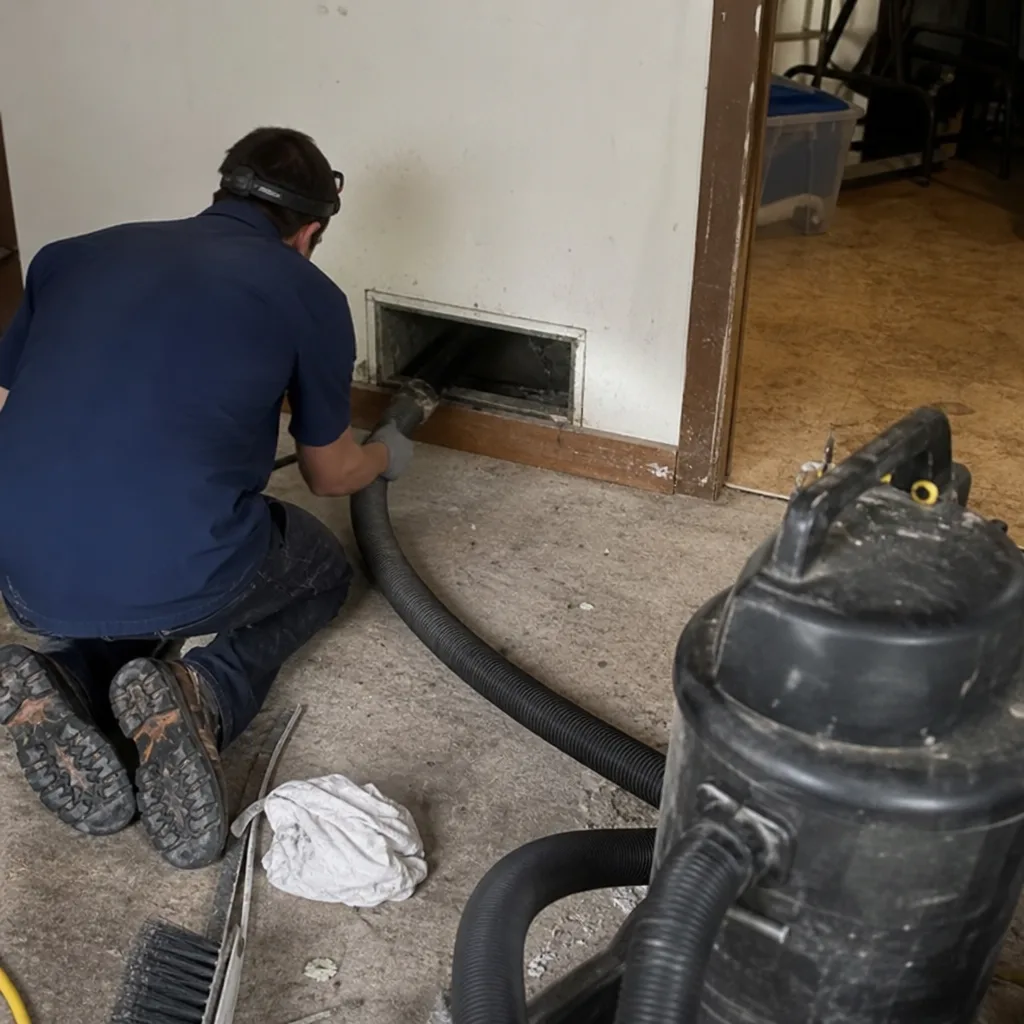 Before
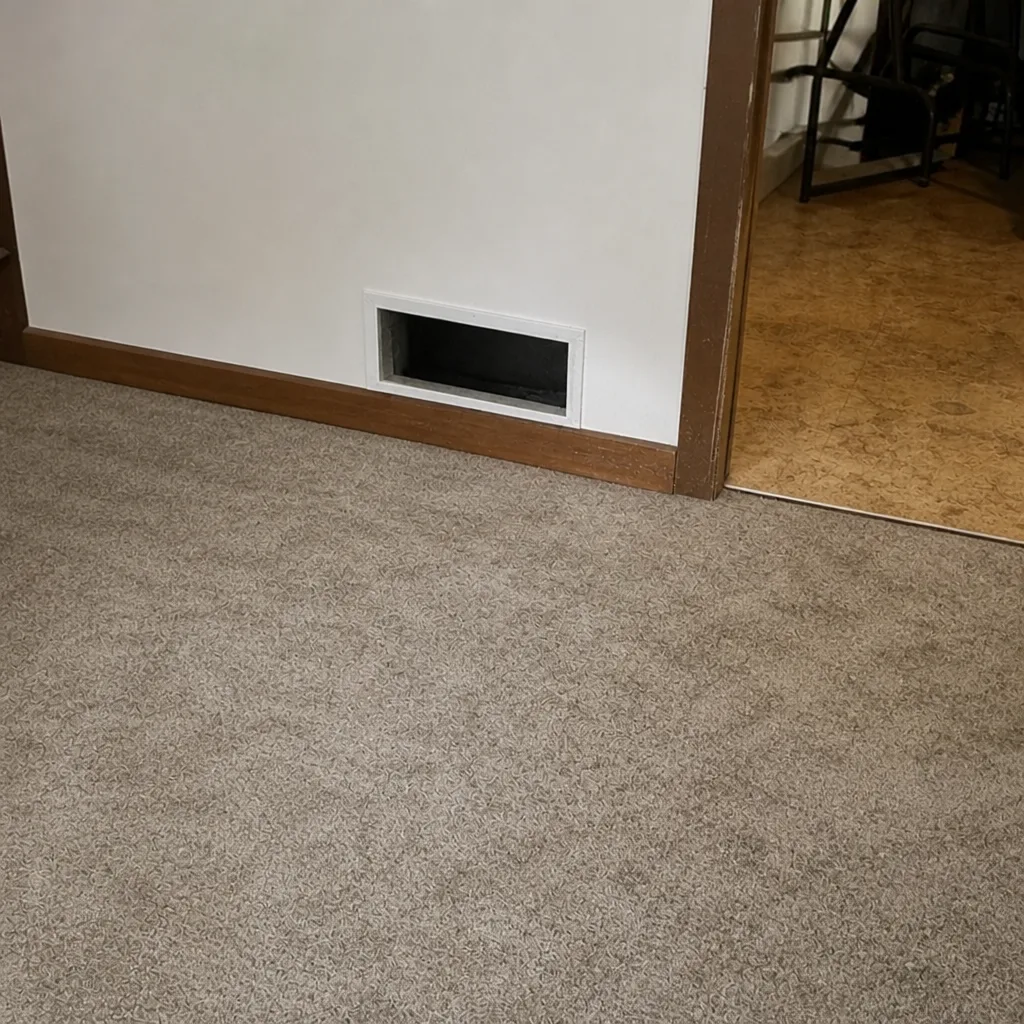 After
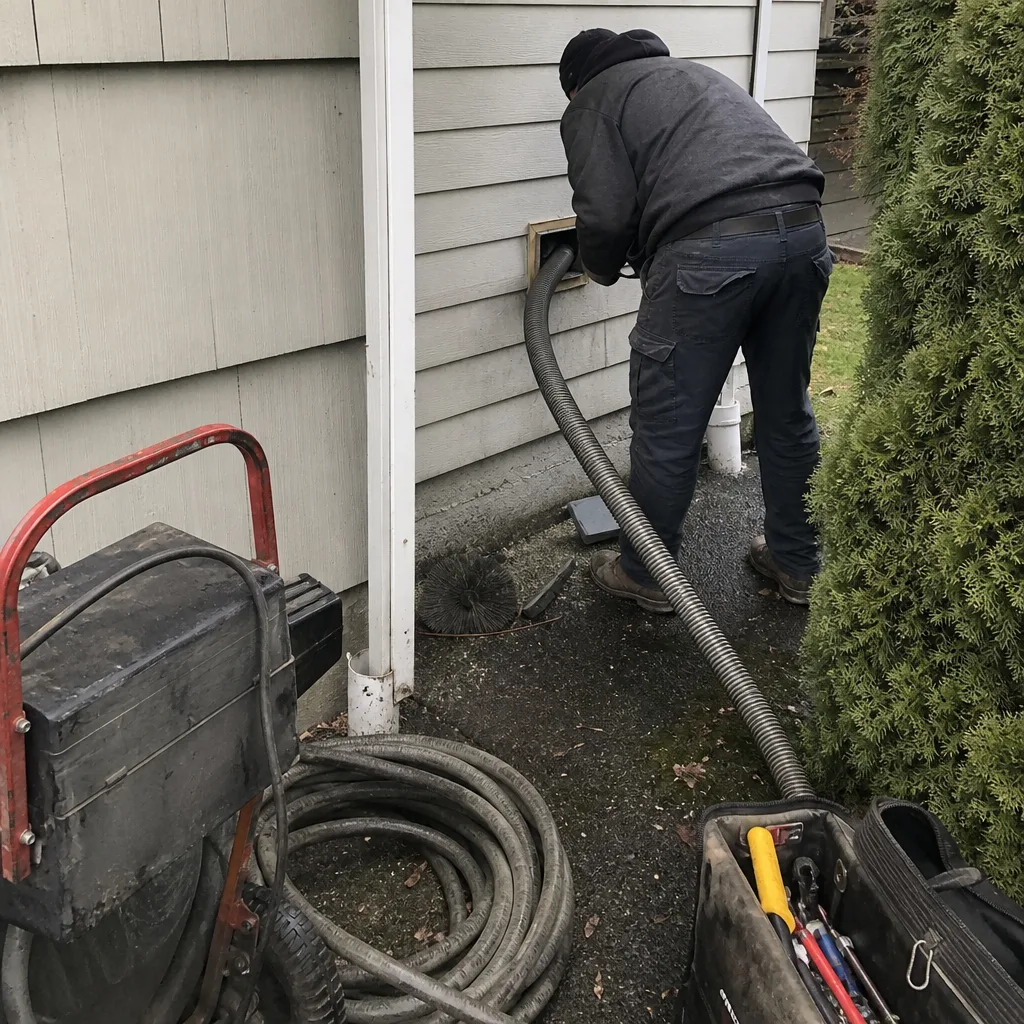 Before
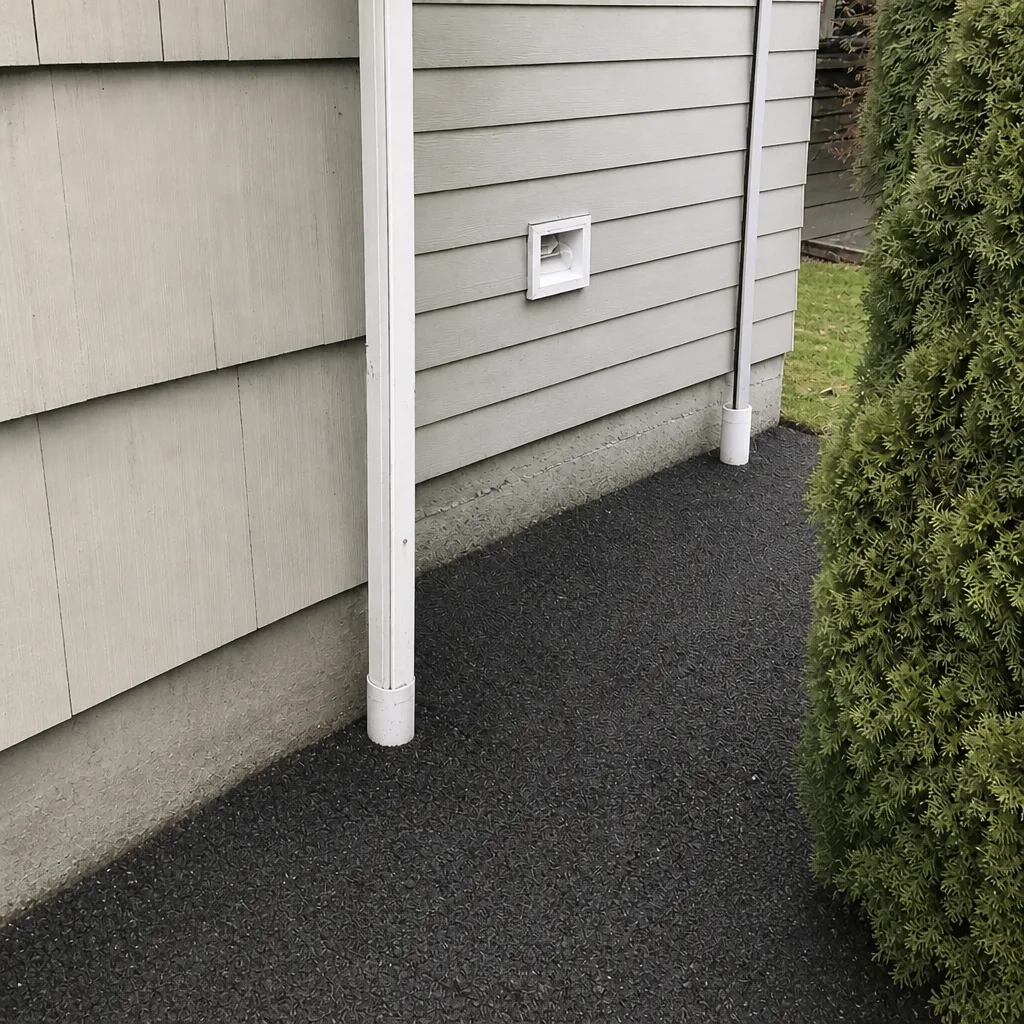 After
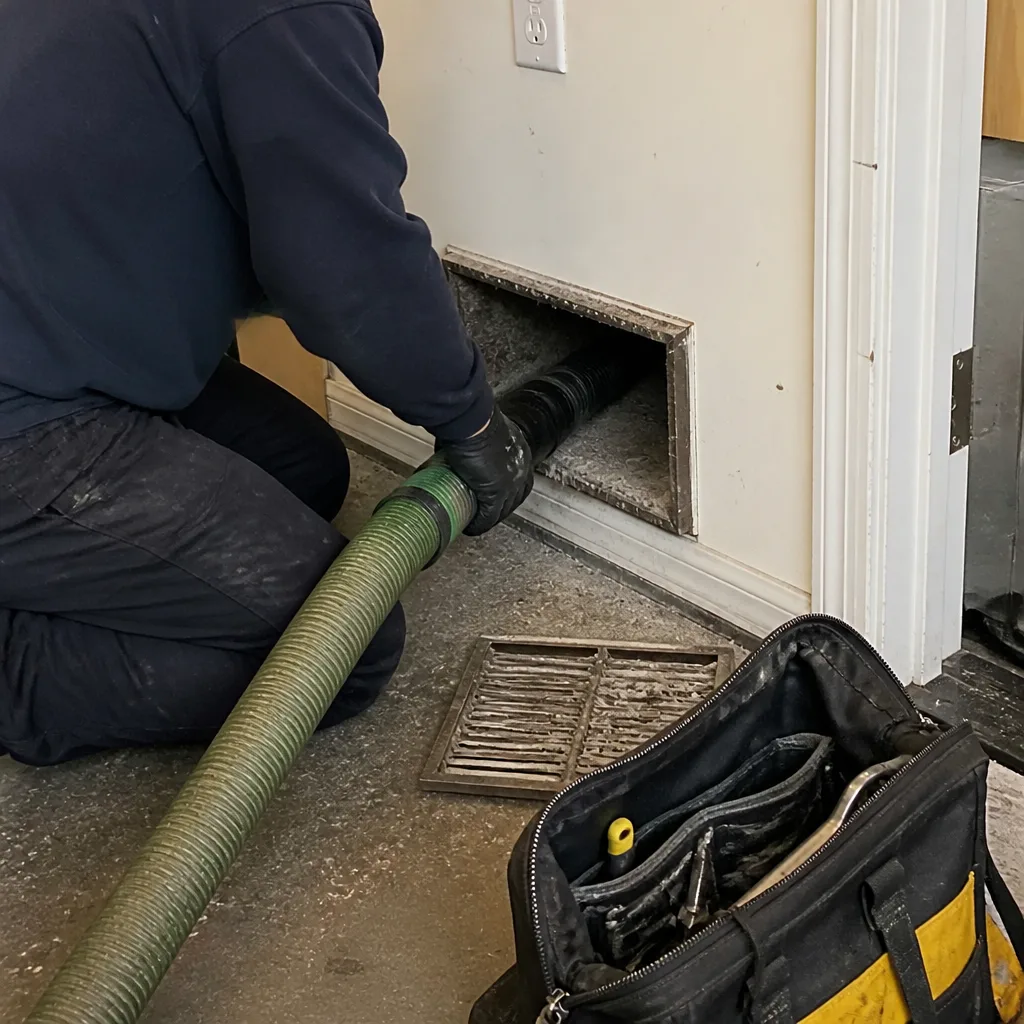 Before
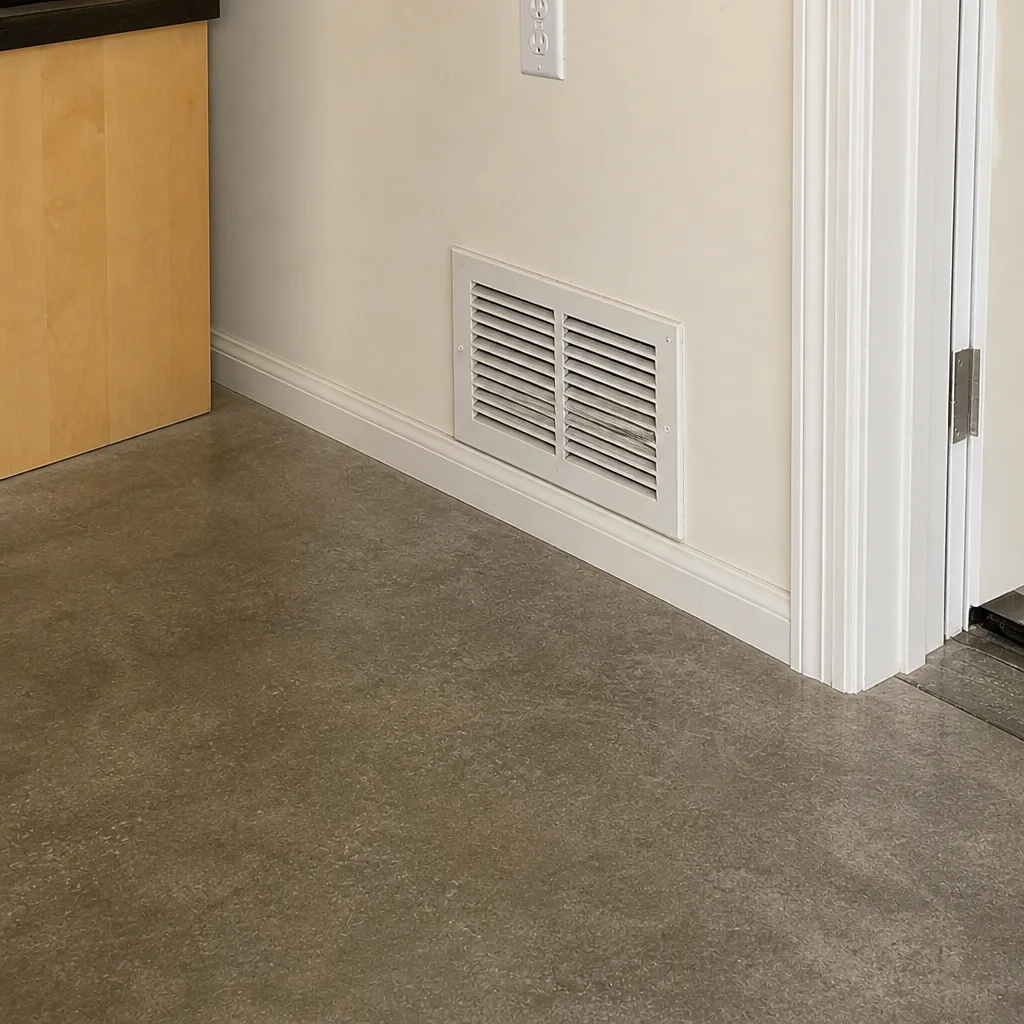 After
When to Call a Professional
Call a professional when you notice a musty smell that shows up when the heating system runs, when return grilles are visibly dark or damp, or when you can see debris inside the grilles you can reach. Call after any water intrusion, renovation, insulation replacement, or rodent sighting, and call if your dryer is taking noticeably longer to dry clothes. Those are the triggers worth acting on. Routine inspections in the shoulder seasons are the best way to catch problems early, and an inspection starts with an honest look rather than a sales pitch. Duct Cleaning Renton offers free estimates in Renton. Call (866) 942-6902. We answer 24/7. Fast dispatch, 7am-7pm.
Frequently Asked Questions
Most Renton homes land between every 2 and every 7 years, and the interval depends on pets, filter grade and discipline, renovation activity, allergies, and system age. There’s no single correct number. The best approach is to inspect in the fall and spring shoulder seasons and set the interval from what you find, then log each cleaning so the next interval is based on real data instead of a rule of thumb. Call (866) 942-6902 for a free estimate.
The wet shoulder seasons in fall and spring create conditions where moisture can linger in duct systems that aren’t running much, and settled dust plus moisture is where musty odors come from. It’s not urgent in the sense of an emergency, but the shoulder months are the right time for an inspection. Catching moisture early is cheaper than dealing with growth that’s spread through the system. Call us for an inspection quote.
Yes. Moving from a MERV-8 to a MERV-11 filter catches more particulate before it reaches the duct walls, which reduces load and stretches the interval. The catch is change discipline: a higher-MERV filter left in past its change point is worse than a low-MERV filter changed on schedule. Brands like Honeywell and Aprilaire make filter cabinets built for higher ratings, and the right choice depends on your system. Call for advice on what fits.
Pricing depends on the size and condition of your system, the number of runs, and whether repairs are needed, so there’s no honest single number we can quote without seeing the system. What we can promise is one flat price per system agreed before work starts, with no per-vent pricing and before-and-after photos of your own ducts so you can see exactly what was done. Call (866) 942-6902 for an exact quote. Estimates are free.
Ask for before-and-after photos of the inside of your own ducts, and ask what equipment will run in your home. We use professional-grade Rotobrush and Nikro systems with Abatement Technologies air filtration on site, which means containment is part of the process: dislodged particulates get filtered rather than recirculated through your living space. Still, the contract should say one flat price agreed before work starts. Call us to schedule.
We are closed Saturday. We’re open Sunday through Friday, 7am to 7pm, and that’s when we send technicians out. We answer the phone 24/7, and a call outside dispatch hours is booked into the next opening. Call (866) 942-6902 for a free estimate.
The cheapest quotes usually reflect a different job: a quick surface pass with a consumer-style vacuum instead of professional extraction, no containment, and no real inspection. The lower price isn’t a better deal if it leaves the system loaded or re-contaminates it. Ask what equipment will actually be in your home and whether the price is fixed per system before anyone starts. Call for a straight answer on scope.
The Bottom Line
The 3-to-5-year rule is a starting point, not a schedule. Your real interval comes from your household’s load factors: pets, filter grade and change habits, renovation history, allergies in the home, and system age. In Renton, the fall and spring shoulder seasons are the inspections that matter most, because that’s when moisture-related buildup gets its start. Upgrade your filter grade and keep to the change schedule to stretch the interval. Log equipment, static pressure readings, and photos after every cleaning so the next call starts with data. And treat water intrusion, rodent problems, insulation work, and HVAC swaps as immediate resets. When you want a baseline set by someone who inspects before quoting, call (866) 942-6902 for a free estimate. We answer 24/7. Fast dispatch, 7am-7pm, Sunday through Friday.
Written by the team at Duct Cleaning Renton.