
Last updated November 15, 2026
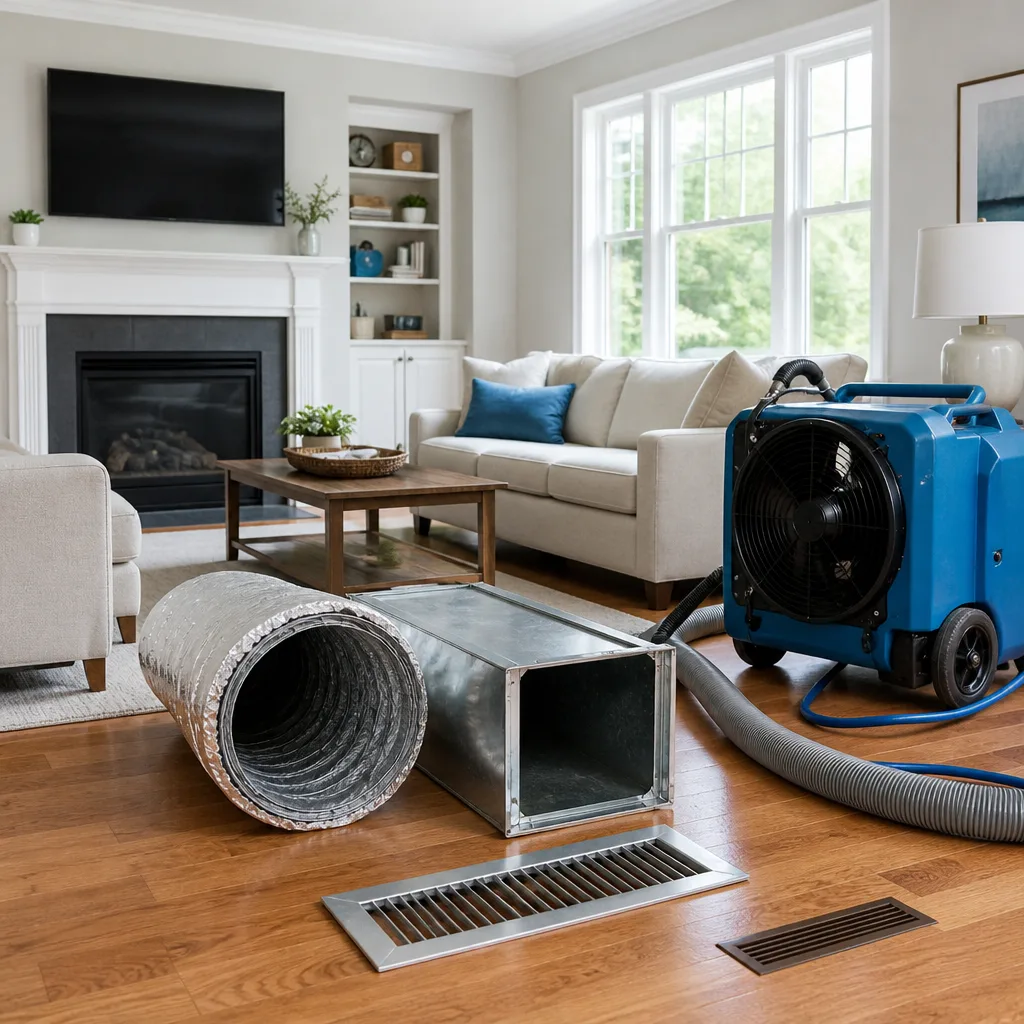 Whole-home duct cleaning
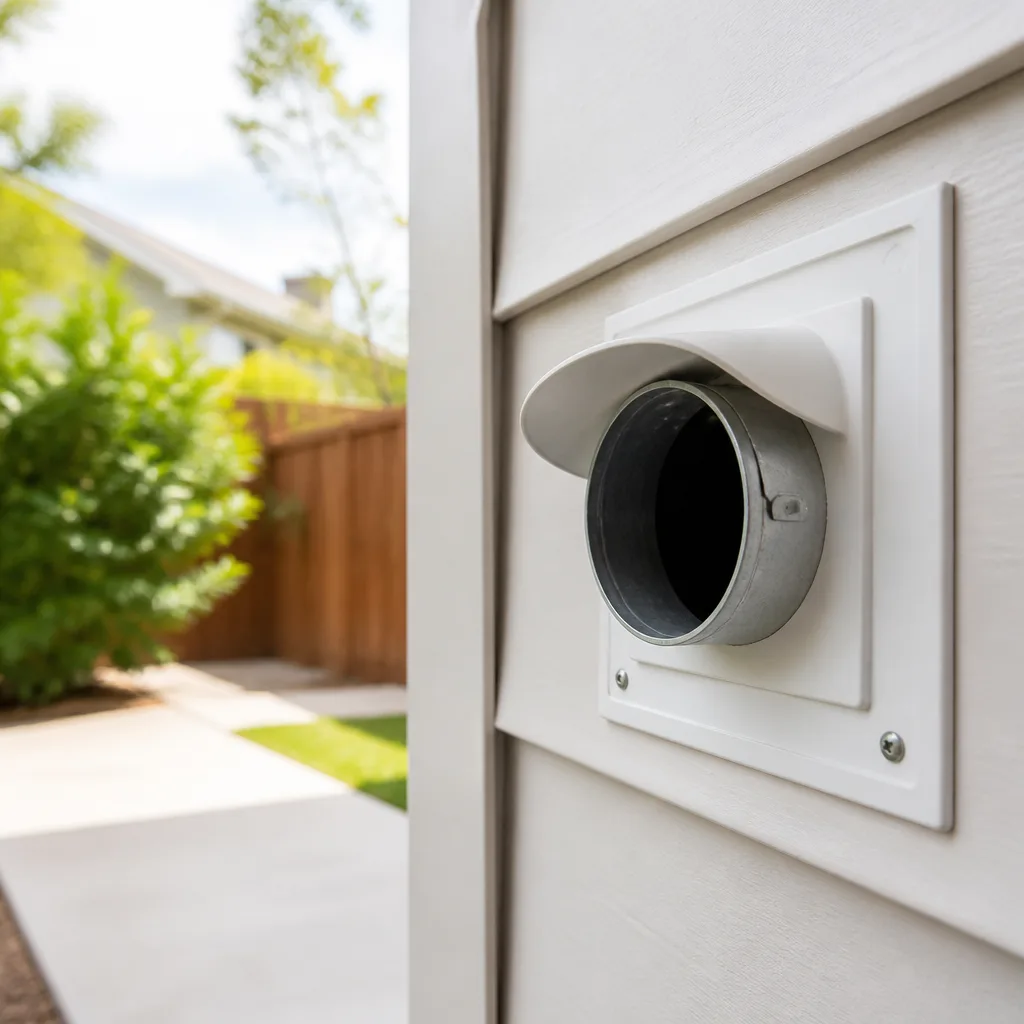 Dryer vent cleaning
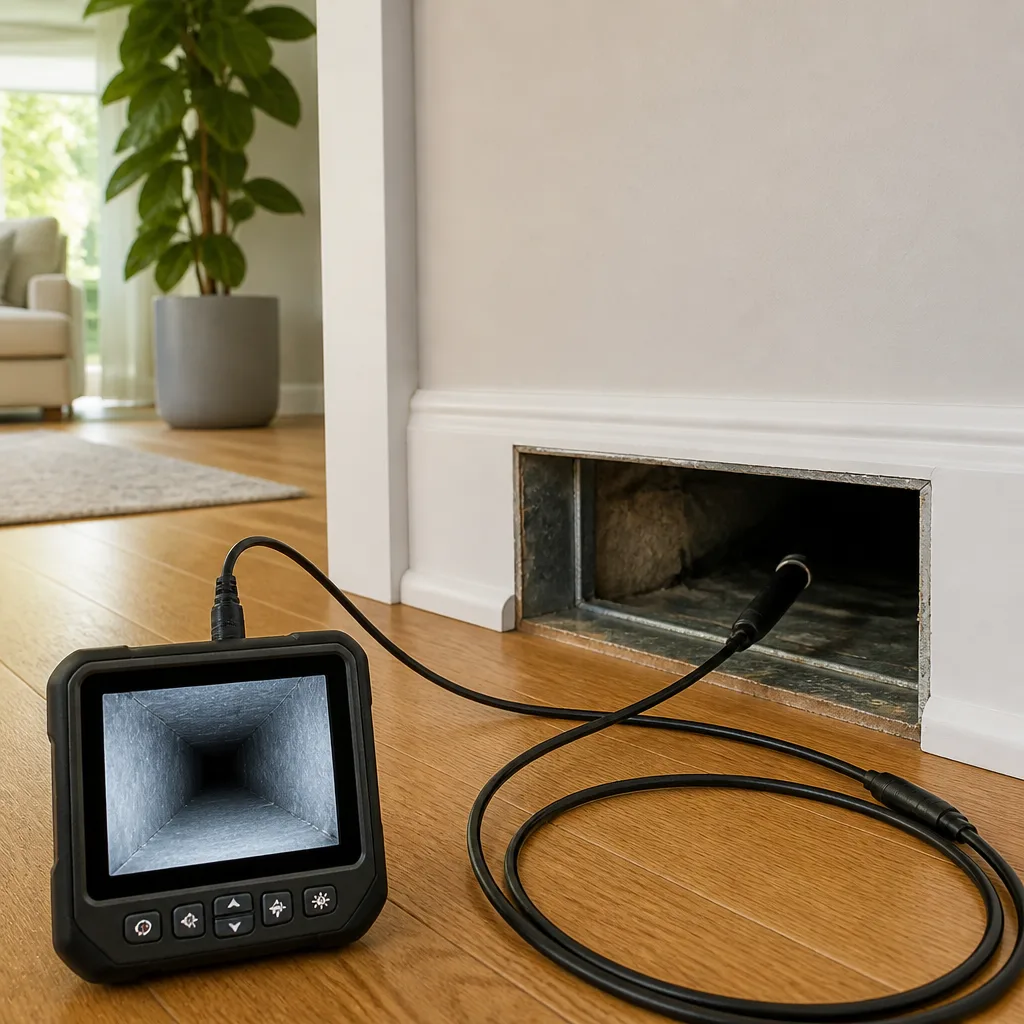 Camera inspection
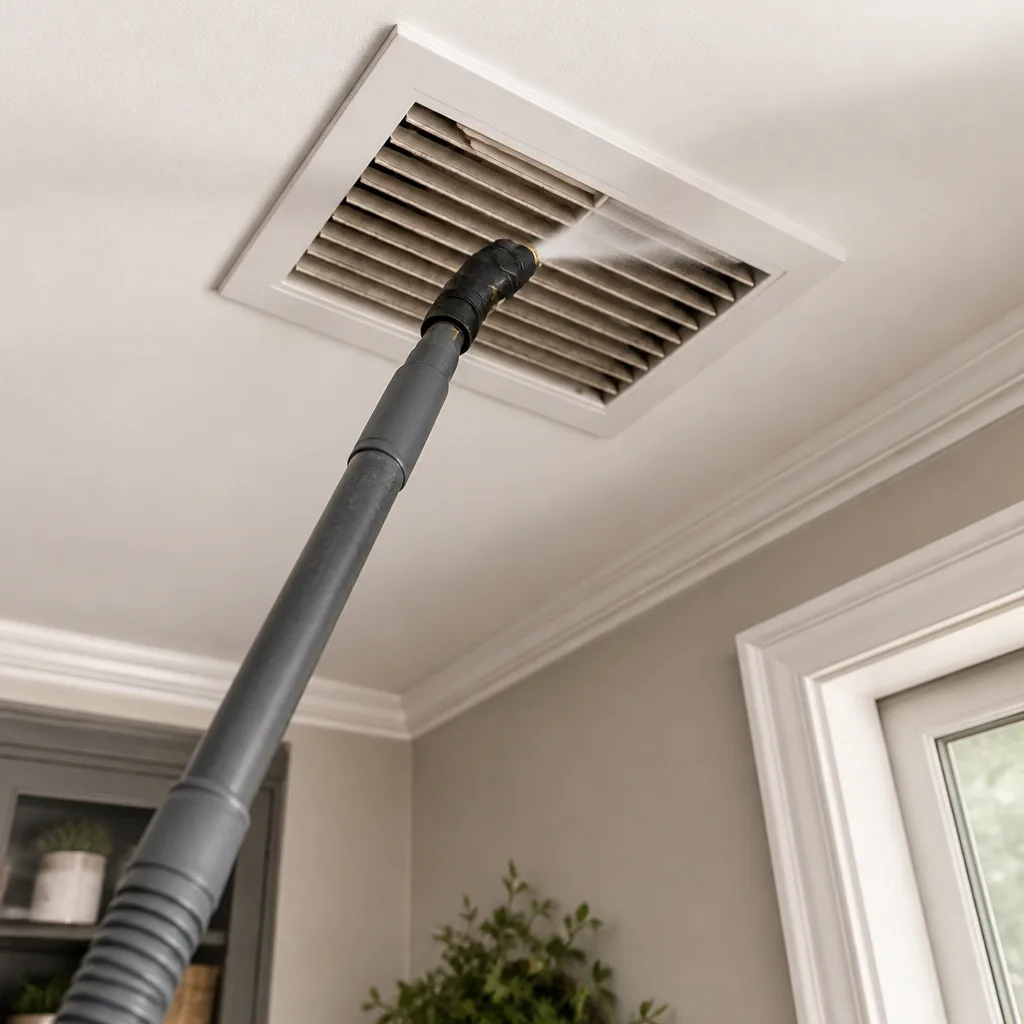 Sanitizing & deodorizing
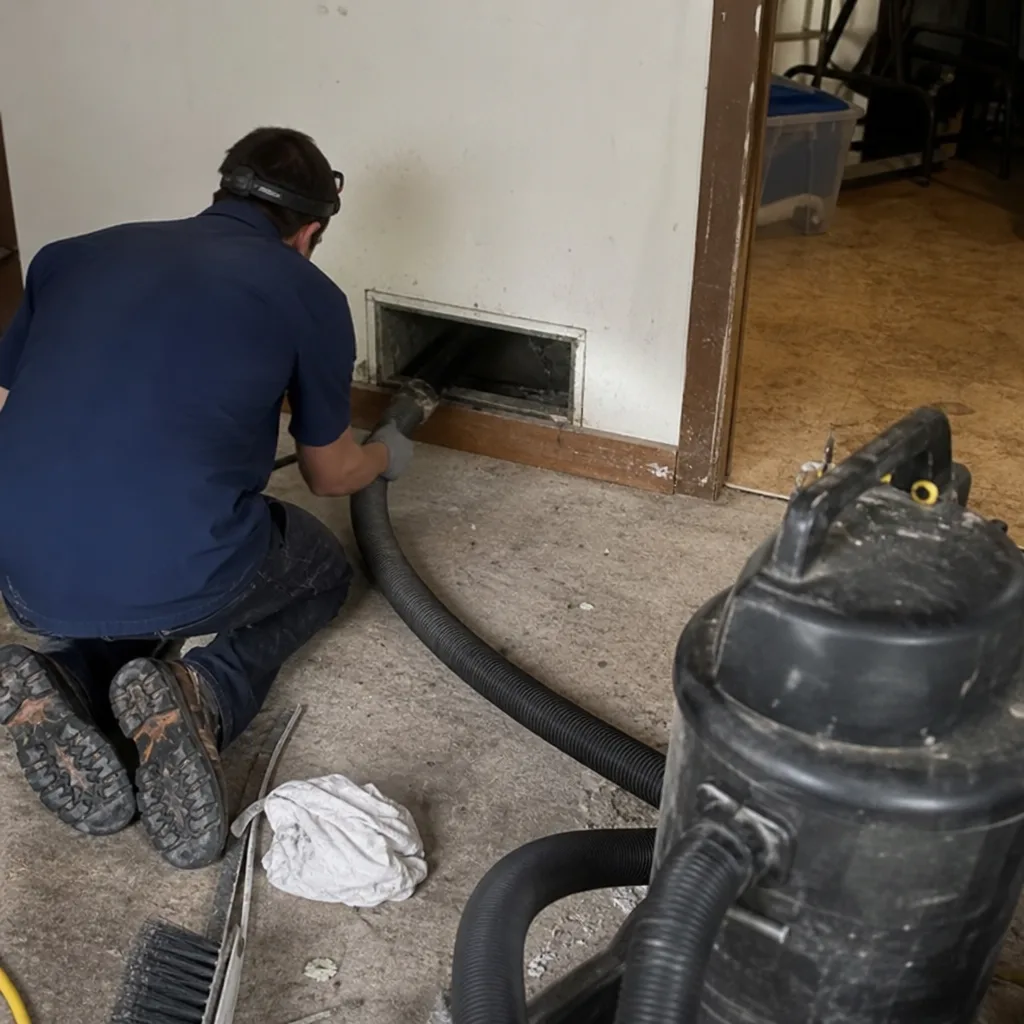
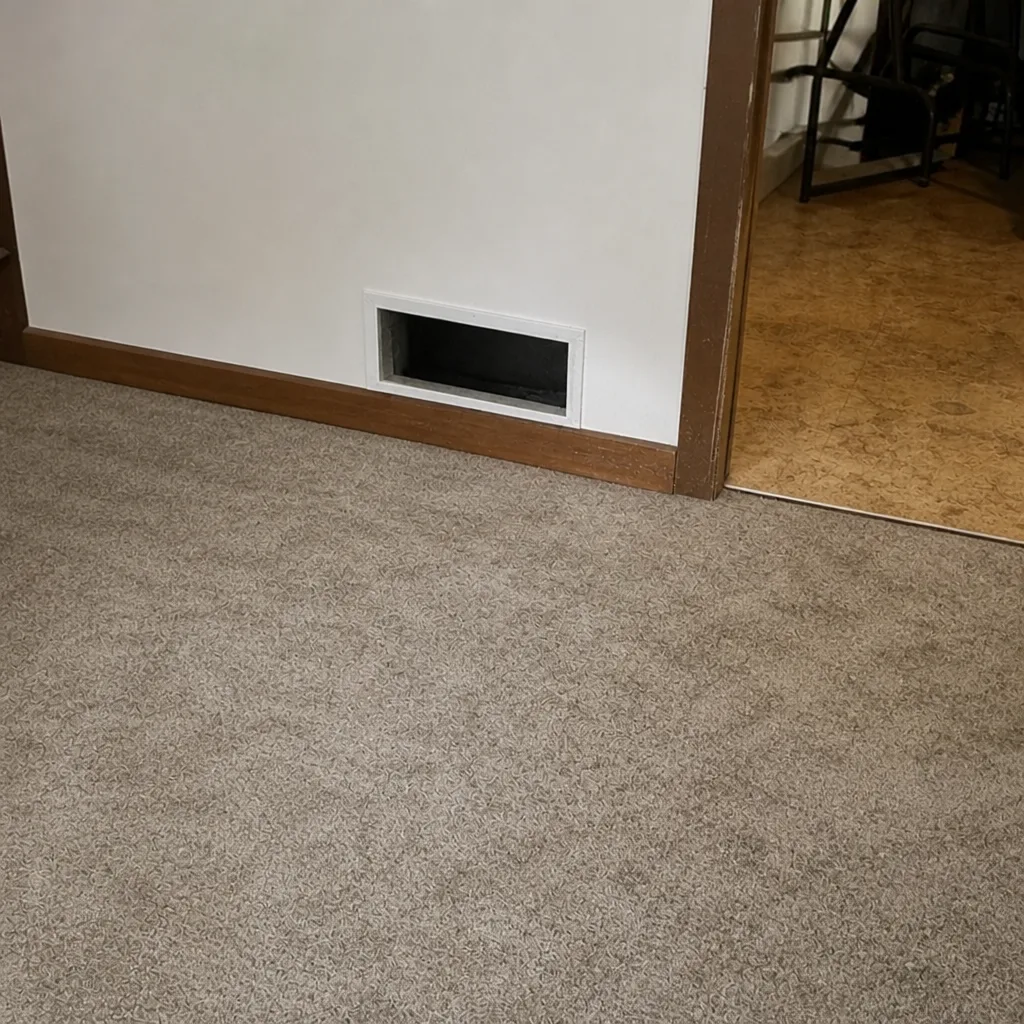
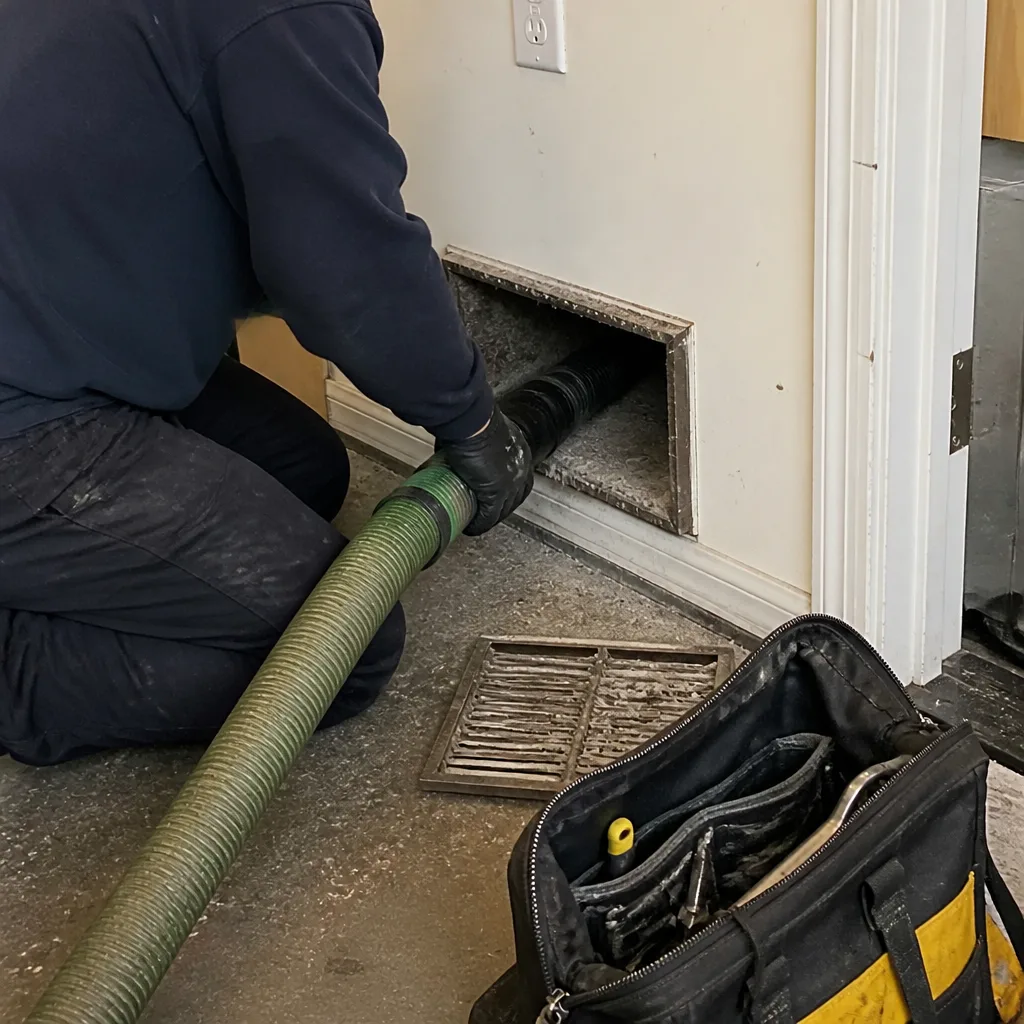
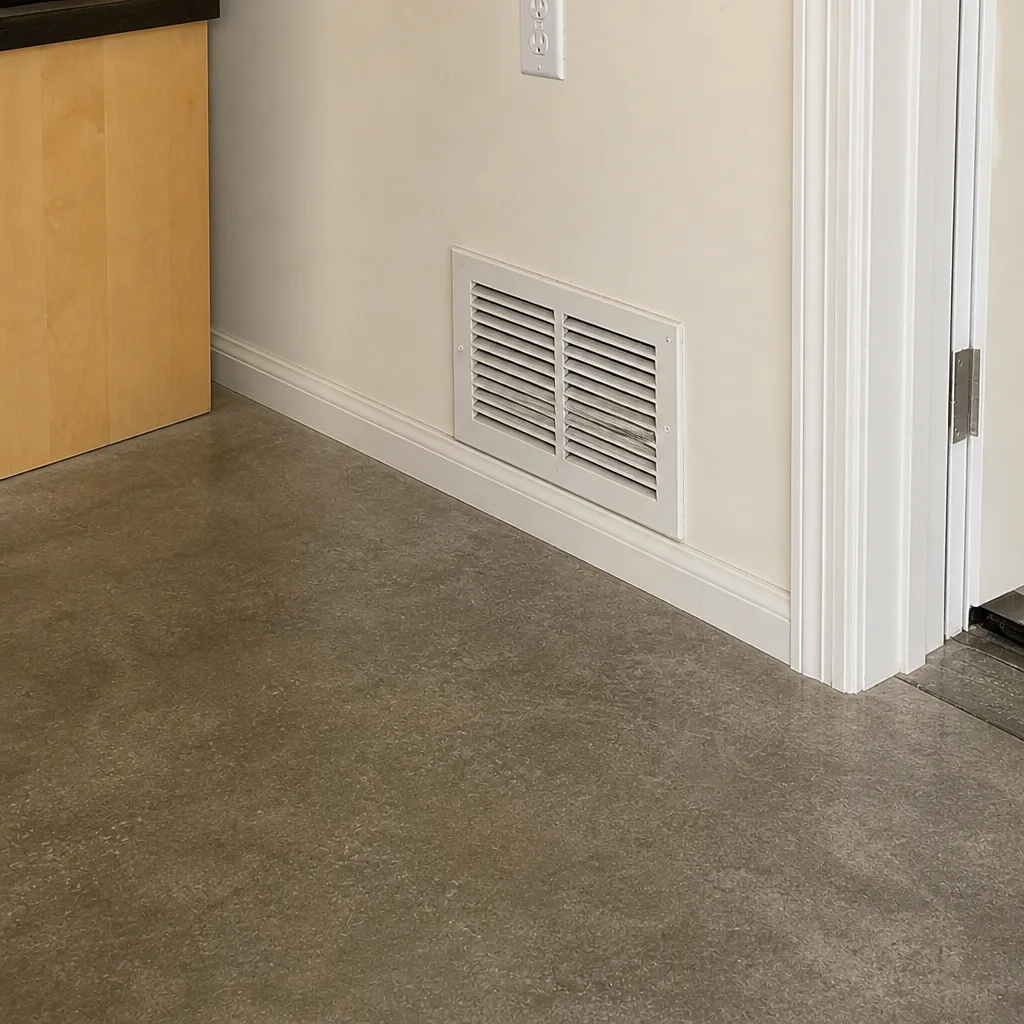
Whole-system duct and dryer vent check with before-and-after photos - you see exactly what came out of your vents
That "$99 whole-house special" is a bait ad - the real number appears once they are in your hallway, or the "clean" is a shop-vac at the register. We photograph the inside of your ducts before and after instead.
Choosing the Right Air Duct Cleaning Brand: A Buyer’s Guide for Renton
Most homeowners shop for duct cleaning the way they shop for a haircut: by price and by the look of the ad. That approach breaks down fast, because the equipment a company operates decides what actually comes out of your ducts and what stays in them. Two trucks can quote the same price and deliver completely different results, because one runs purpose-built rotary and HEPA extraction gear and the other runs a shop vac with a logo on it. In this guide we explain what the leading professional systems physically do, how to tell a real equipment investment from a rental, and the exact questions to ask before you book in Renton.
Quick Answer
The right duct cleaning brand in Renton is the one whose equipment you can verify: a rotary contact cleaning system for the duct walls, a HEPA-rated vacuum with real airflow to capture what gets loosened, and negative-pressure air filtration running during the whole job. Ask what system they use, how many CFM their extractor pulls, and whether the containment unit is on-site. A company that answers those three questions clearly is usually the serious one.
Styles & brands we work with
- Whole-home duct cleaning
- Dryer vent cleaning
- Camera inspection
- Sanitizing & deodorizing
Table of Contents
- Why Equipment Is the Most Honest Signal of Duct Cleaning Quality
- Rotary Contact Cleaning vs. Air-Whip Agitation: What the Difference Means for Your Ducts
- What Nikro Extraction Systems Bring, and Why CFM Is the Number to Ask About
- Containment During Cleaning: Why Abatement Technologies Filtration Protects the Rest of Your Home
- How to Verify a Contractor Actually Owns and Operates the Equipment They Claim
- The Questions That Reveal Equipment Capability Without Needing to Know Brand Names
- Matching the Cleaning Method to Honeywell and Aprilaire Whole-Home Systems
- Dryer Vent Cleaning as a Fire-Safety Service, Not an Add-On
Why Equipment Is the Most Honest Signal of Duct Cleaning Quality
Reviews tell you whether someone showed up on time. Certifications tell you a test was passed. Neither one tells you what happened inside your duct walls for the two hours the crew was there. Equipment does. A rotary brush system contacts the duct surface and mechanically lifts the settled layer; a vacuum with insufficient airflow loosens the dust and then lets most of it settle back down. The difference between those two outcomes is the entire job.
This matters more in older Puget Sound housing stock than in new construction, because a lot of Renton homes have decades of accumulated dust, pet hair, and renovation debris layered on the duct walls. That material doesn’t lift off with a light pass. It needs agitation against the surface followed by enough capture volume to remove it before it redistributes. When we walk a homeowner through the equipment before the job, the conversation stops being about price per vent and starts being about what gets removed.
There’s a second reason equipment is the honest signal: it’s expensive and it’s visible. A contractor running a purpose-built rotary system and a HEPA extractor made a capital decision to do duct work properly. A contractor running consumer gear made a different decision. You can see which one is which, and that’s more verifiable than any claim on an ad.
What “professional-grade” actually means
Professional-grade means purpose-built for duct interiors: flexible rotary shafts that follow the duct run, brush heads sized to the material and profile, and a vacuum system rated for continuous capture rather than a burst of suction. Professional-grade equipment, not a shop vac with a logo on it, is the baseline we hold ourselves to. Our technicians have up to 12 years of experience running exactly this kind of gear through the variety of duct layouts you find in Renton homes.
Rotary Contact Cleaning vs. Air-Whip Agitation: What the Difference Means for Your Ducts
These are the two main mechanical methods, and they behave very differently. Air-whip agitation sends a compressed-air whip into the duct and relies on turbulence to knock debris loose. Rotary contact cleaning drives a spinning brush head that physically scrubs the duct wall, then pulls the loosened material back into the vacuum. Both can be part of a complete job. Only one actually contacts the surface.
How air-whip agitation works
A compressed-air hose is fed into the duct and the whipping motion creates turbulence. It’s effective for loose surface dust in rigid metal ductwork and it’s fast. The limitation is contact: turbulence lifts what’s already loose and gives the more adhered material a shake. In ducts with a thick settled layer or sticky residue from cooking or pet dander, air alone doesn’t break the bond.
How rotary contact cleaning works
A flexible rotary shaft drives a brush head that contacts the duct wall as it advances, loosening the adhered layer mechanically. That’s the Rotobrush approach, and it’s the reason it handles materials air whips struggle with. Contact cleaning is what turns a “loosened” duct into a clean one.
Which method suits which duct material
- Rigid galvanized metal: rotary contact cleaning works well and is generally the primary method; air whip can supplement.
- Flexible non-metallic duct (the corrugated stuff in a lot of older homes): needs brush heads matched to the profile and lower aggression, since the ridges trap debris and hard contact can stress the liner.
- Ductboard (fiberglass-lined): requires careful brush selection because the surface is more easily damaged; contact must be controlled, not aggressive.
- Sheet metal with heavy adhered buildup: rotary contact first, then capture.
If a company uses one method for every home in Renton regardless of duct type, that’s worth asking about. Different construction calls for different settings.
What Nikro Extraction Systems Bring, and Why CFM Is the Number to Ask About
Loosening debris is half the job. Capturing it is the other half, and that’s where the extraction side either works or doesn’t. Nikro extraction systems are built around high-efficiency filtration and meaningful airflow, measured in cubic feet per minute. CFM is the honest number to ask any contractor about, because it’s the measure of how much air the vacuum can actually move while the cleaning head is working against the resistance of a duct run.
Suction at the open end of a hose and suction at the far end of a duct run are not the same thing. Every foot of duct, every elbow, and every transition costs airflow. A vacuum that reads impressive on a spec sheet can be gasping by the time the head is deep in the system. That’s why the extraction unit and the containment unit work as a pair, and why CFM is the figure a serious contractor will tell you without hesitation.
Why HEPA-rated capture matters in a Renton home
Duct dust is fine particulate. If the extractor’s filtration doesn’t hold it, the vacuum becomes a distribution system for exactly what you’re trying to remove. HEPA-rated equipment is the standard we use because it captures the small stuff, not just the visible debris. This is one of the reasons we describe high-efficiency capture as a service decision rather than a marketing line: it determines where the dust ends up.
Containment During Cleaning: Why Abatement Technologies Filtration Protects the Rest of Your Home
Here’s the part of duct cleaning that’s invisible on the invoice but very visible on your furniture. When you agitate duct interiors, particulates go airborne. If the job doesn’t control them, they don’t vanish; they drift into the living space. That’s called cross-contamination, and it’s a sign the job was done without containment.
Abatement Technologies air scrubbers are used on-site during the cleaning to contain what gets dislodged rather than recirculating it through the home. The principle is negative pressure: the containment unit pulls air through filtration at a rate that keeps the working area under a slight vacuum, so airborne dust gets drawn out of the living space and held in the filter rather than settling onto your bookshelf. Containment-first cleaning means particulates out of your ducts, not into your living room.
What to look for on arrival
- A filtration unit set up before any cleaning begins, not after.
- Hoses routed and sealed so the work zone stays under negative pressure.
- The contained air exhausting through the filter stack, not just back into the room.
- Before-and-after photos of the duct interior, so you can see the difference rather than take it on faith.
If the crew starts agitating ducts with no containment running, that’s the moment to stop and ask why. It’s also a question worth settling when you book, not when the truck is in the driveway.
How to Verify a Contractor Actually Owns and Operates the Equipment They Claim
Any company can name a brand. Fewer can show you the machine. The gap between claiming equipment and operating it is where the low quote hides, because rented gear or a subcontracted crew has a cost structure that pushes toward doing more homes faster with less thorough setup. Verification isn’t difficult, and it’s reasonable to ask.
Four checks that reveal whether the equipment is real
- Ask to see the extractor and containment unit when they arrive. The gear should be purpose-built duct equipment with manufacturer labeling, not a wet/dry vac.
- Ask who is performing the work. The crew on-site should be the company’s own technicians, trained on the equipment, not a third party sent to do the job under someone else’s name.
- Ask how the containment unit is set up before cleaning starts. A technician who can explain the sequence has run it many times.
- Ask for photos of the duct interior before and after. If the work was done with real contact cleaning, there’s documentation. If there isn’t, ask why.
When you’re comparing duct cleaning Renton options, these four questions sort companies quickly, and none of them require you to know brand names or understand equipment specs. They just require the company to be able to show its work.
The Questions That Reveal Equipment Capability Without Needing to Know Brand Names
You don’t need to memorize model numbers. You need answers that are specific rather than confident. A serious technician answers directly, because the equipment is the easy part of their conversation. Vague answers, or ones that pivot back to price, are the tell.
Questions worth asking before you book
- “What do you use to agitate the duct walls?” A real answer names a rotary brush or contact system and lets you ask how it’s matched to your duct material.
- “What’s your extractor’s CFM rating?” A number, not “high-powered.” The number tells you how much air is moving while the head works against a full duct run.
- “Do you run air filtration during the cleaning?” You’re listening for a containment unit on-site, not a promise to clean up afterward.
- “How do you handle flexible duct versus rigid metal?” The answer should change based on your material.
- “What’s the flat price for the whole system?” A per-vent quote is the bait-and-switch setup; a whole-system price agreed before work starts is the honest one.
- “Can I see before-and-after photos of the work?” Documentation is standard on a real job.
Asking about air duct cleaning this way keeps the conversation on capability, not sales pitch. It also settles the objection that trips up most homeowners: why are some quotes so much cheaper? Usually because the cheap quote assumes less equipment, less setup, and less time on the duct wall. One flat price per system, agreed in writing before work starts, is the arrangement that protects you from that gap.
Matching the Cleaning Method to Honeywell and Aprilaire Whole-Home Systems
If your home runs premium whole-home air quality equipment, duct cleaning isn’t a standalone job. It’s one piece of a system that includes filtration or humidification components downstream, and the cleaning method needs to respect that. Honeywell and Aprilaire systems handle specific filtration and humidity tasks, and a cleaning crew that doesn’t understand them can do real harm by treating every duct run the same way.
Our technicians are trained on Honeywell and Aprilaire compatibility, meaning they understand premium whole-home air quality equipment, not just generic ductwork. That matters in a few specific ways: filtration housings and media need to be handled correctly so the cleaning doesn’t disturb or bypass the filter; humidifier connections and bypass ducts need to stay intact; and the cleaning sequence has to account for the fact that the system has components beyond the ducts themselves. Built for homes running Honeywell and Aprilaire systems means we ask about that equipment before the job, not after.
What we check when a home runs premium air quality equipment
- Filtration housing condition and whether the media is in place before cleaning begins.
- Humidifier bypass and water connections, so agitation doesn’t stress a fitting.
- The full return and supply layout, since whole-home systems often run longer, more complex duct paths.
- Whether cleaning and repair both need to happen, which is often the case in older Renton homes.
Dryer Vent Cleaning as a Fire-Safety Service, Not an Add-On
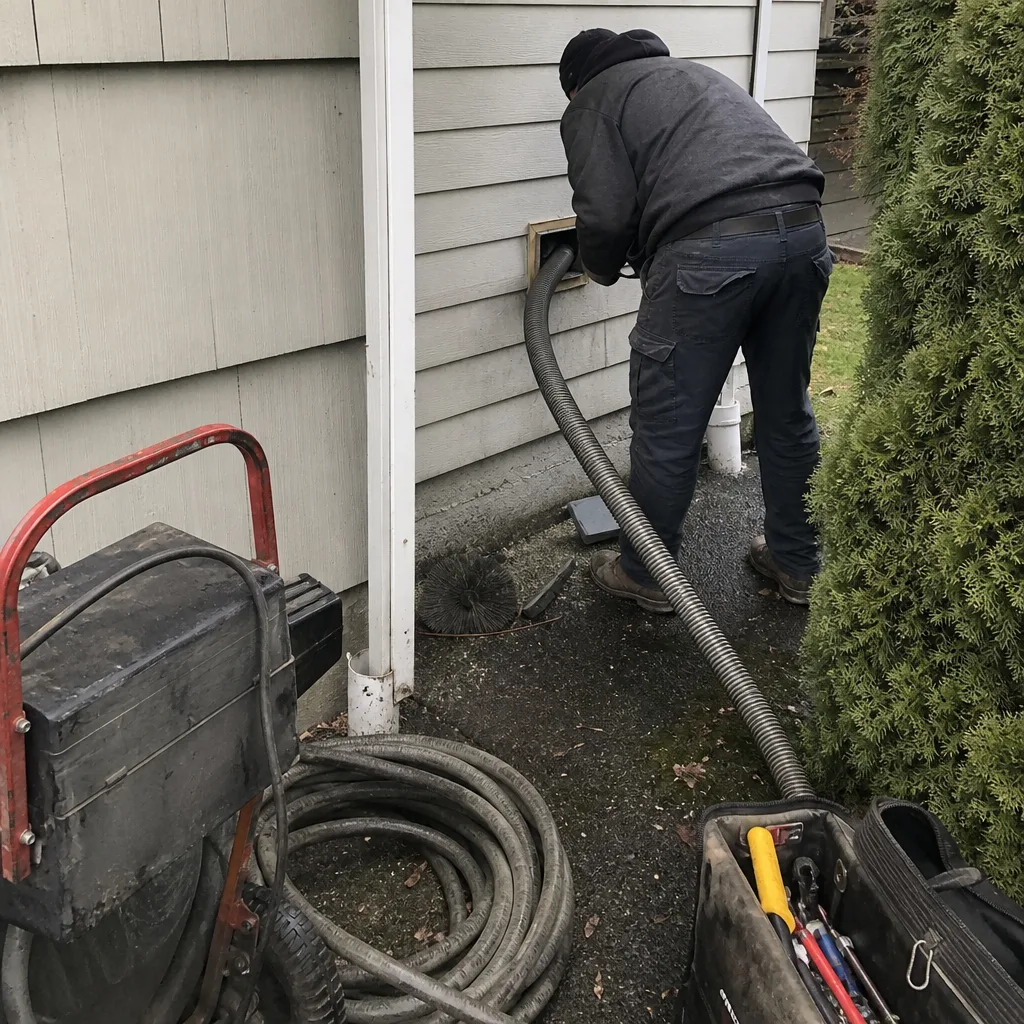
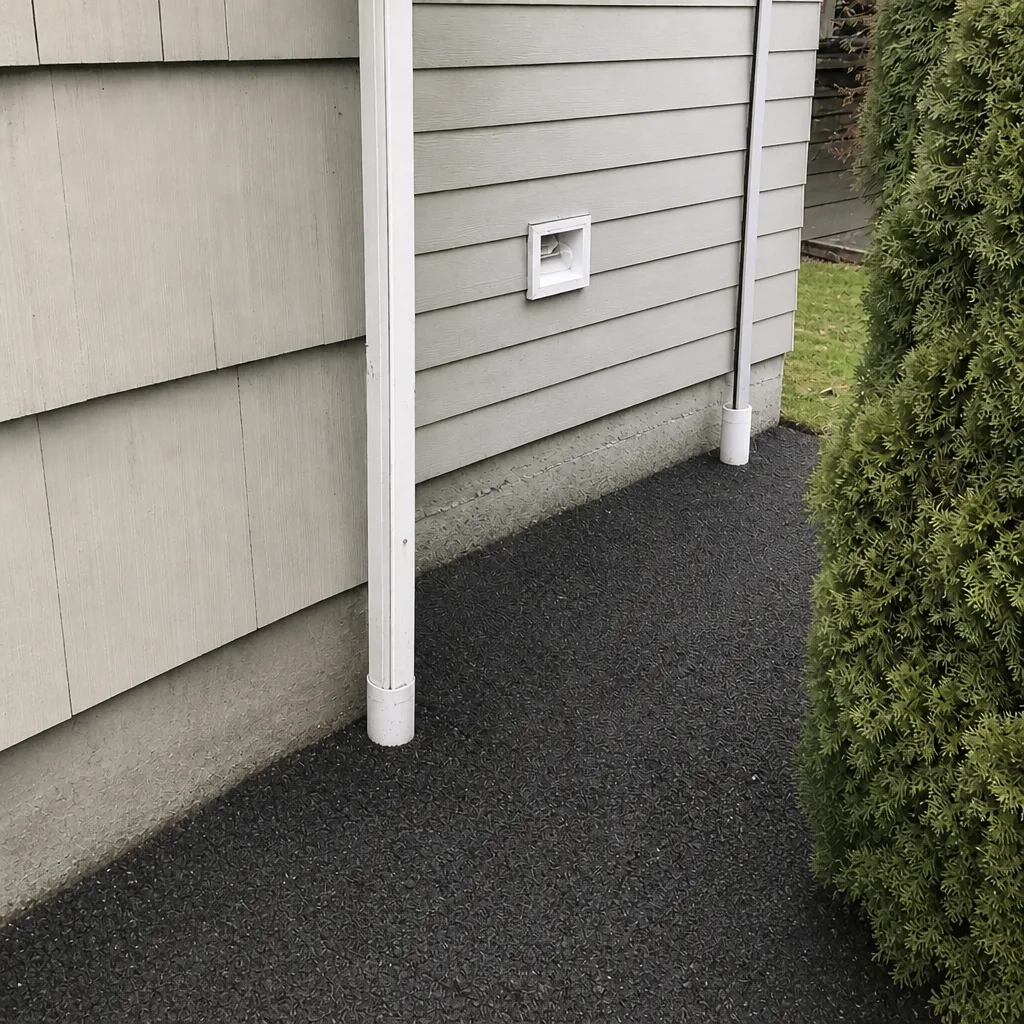
Duct cleaning companies often list dryer vent cleaning as a small convenience. That undersells it. Lint accumulation in a dryer vent restricts airflow and is a documented fire-safety risk, which is why the service belongs in the same category as duct repair rather than as a light upsell. Dryer vent cleaning that’s about fire safety, not upselling, is a different service than a quick vacuum of the hose behind the machine.
The job involves clearing the entire vent run, including the transition duct behind the dryer and the exterior termination, then confirming the flap operates and airflow is restored. If a vent run is crushed, disconnected, or routed with too many elbows, that’s a repair question, not just a cleaning one. It’s part of why we offer dryer vent cleaning as its own service line alongside duct cleaning and duct repair. We repair ducts, not just clean them, and the same applies to the vent system.
Common Mistakes to Avoid
- Booking on the lowest per-vent quote. A per-vent number is the setup for the bait-and-switch. Ask for one flat price for the whole system, agreed in writing before work starts, and compare that.
- Not asking what equipment will be on-site. In Renton, where a lot of homes have older flexible and ductboard runs, the method needs to match the material. If the company uses the same approach for every home, ask why.
- Skipping the containment question. A crew that agitates ducts without a filtration unit running is sending the dust into your living space. Settle this before they start.
- Ignoring the premium air quality system. If you run Honeywell or Aprilaire equipment, ask whether the crew is trained on it. Generic duct cleaning can disturb the components it doesn’t understand.
- Treating the dryer vent as optional. Lint buildup in the vent run is a documented fire risk, not just a maintenance item. It deserves its own inspection.
- Forgetting to ask about repair. In older Puget Sound housing, cleaning often turns up crushed flexible runs or disconnected joints. A company that only cleans stops at the problem.
- Deciding without documentation. Before-and-after photos of your ducts are the simplest proof the work happened. Ask for them and keep them.
See the difference
 Before
 After
 Before
 After
 Before
 After
When to Call a Professional
Call a professional when ducts have been in service for years without a cleaning and the household has pets, allergy sufferers, or recent renovation work; when a dryer takes more than one cycle to dry a load or the lint screen fills faster than usual; when you smell a musty odor coming from vents; or when you can see debris or damage at a register or a visible duct run. Call before starting any project that involves opening walls or rerouting ductwork, so the system is cleaned before it’s closed up. Equipment-driven cleaning matters most when there’s a real reason to do it, and a trained technician can tell you whether yours is a cleaning job or a repair job. Duct Cleaning Renton offers free estimates in Renton, so it’s easy to find out. Call (866) 942-6902. We answer 24/7. Fast dispatch from 7am to 7pm, Sunday through Friday.
Frequently Asked Questions
Most whole-home duct cleaning jobs run a few hundred dollars up to around a thousand, depending on duct size, layout, accessibility, and how much adhered buildup is in the system. Exact how much air duct cleaning costs in Renton should be confirmed with a written estimate from the company doing the work, not from a coupon. Call (866) 942-6902 for an exact quote. Estimates are free.
Cheap quotes usually assume less equipment, less setup, and less time on the duct wall. A low per-vent figure often means air-whip agitation without a containment unit, and the final invoice can climb once the technician is on-site. One flat price per system, agreed in writing before work starts, is what protects you. Call (866) 942-6902 to get that flat price.
Ask for before-and-after photos of your own ducts, and ask what equipment ran during the job. A rotary contact system plus HEPA extraction plus containment leaves documentation because the work produces visible change. If a company can’t show you photos, that’s a reason to ask more questions. Call (866) 942-6902 and we’ll walk you through what your job involves.
There’s no universal schedule. Homes with pets, allergy sufferers, smokers, or recent renovation work generally benefit from more frequent cleaning than a low-occupancy household with a well-maintained filtration system. The honest answer is “when there’s evidence it’s needed,” and a free estimate is the way to find out. Call (866) 942-6902 to schedule yours.
Yes, because equipment determines what’s removed versus left behind. Rotary contact cleaning physically scrubs the duct wall; a HEPA extractor captures the loosened particulate; a filtration unit keeps it out of your living space. A company using all three performs a different job than one using a shop vac. Call (866) 942-6902 to ask about ours.
Yes, and the cleaning should be planned around that equipment rather than treating it as generic ductwork. Our technicians are trained on Honeywell and Aprilaire compatibility, so filtration housings and humidifier components are handled correctly during the job. If you’re not sure what your system includes, call (866) 942-6902 and we’ll help you identify it before the estimate.
The Bottom Line
The most reliable way to judge a duct cleaning company isn’t the ad or the coupon, it’s the equipment and the questions that reveal it. Rotary contact cleaning removes what air alone can’t. A HEPA extractor with real CFM captures what gets loosened. Containment filtration keeps it out of your living space. Verification comes down to four questions: what equipment, what CFM, is containment on-site, and can I see before-and-after photos. In Renton, where older housing stock and long duct runs make method selection matter, those questions do more for your decision than any review count. Get a flat price per system, and get it in writing.
Duct Cleaning Renton provides air duct cleaning, dryer vent cleaning, and duct repair with professional-grade Rotobrush and Nikro systems and Abatement Technologies air filtration. Call (866) 942-6902 for a free estimate. We answer 24/7. Fast dispatch from 7am to 7pm, Sunday through Friday.
Written by the team at Duct Cleaning Renton.